Reframing violence and community safety: Resources for narrative change
January 2026
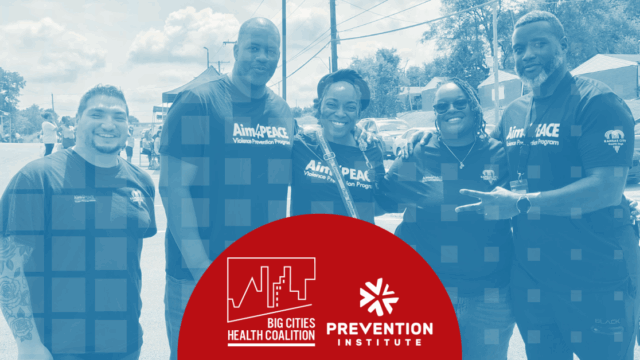
Photo of courtesy of Kansas City (Mo.) Health Department
SHARE THIS
Narratives are the beliefs, themes, and values that set the stage for how we understand the world around us. In the context of violence and community safety, narratives influence how we define the issue and the solutions we think will work. The resources listed here provide a starting place to understand what narrative change is and how it can look in practice.
This set of online resources is intended to offer guidance to health departments, community advocates, service providers, and other changemakers as they consider opportunities to adopt narrative change strategies and promote transformative narratives in their local communities.
Guiding Principles for Investment and Primary Prevention
PREVENTION INSTITUTE
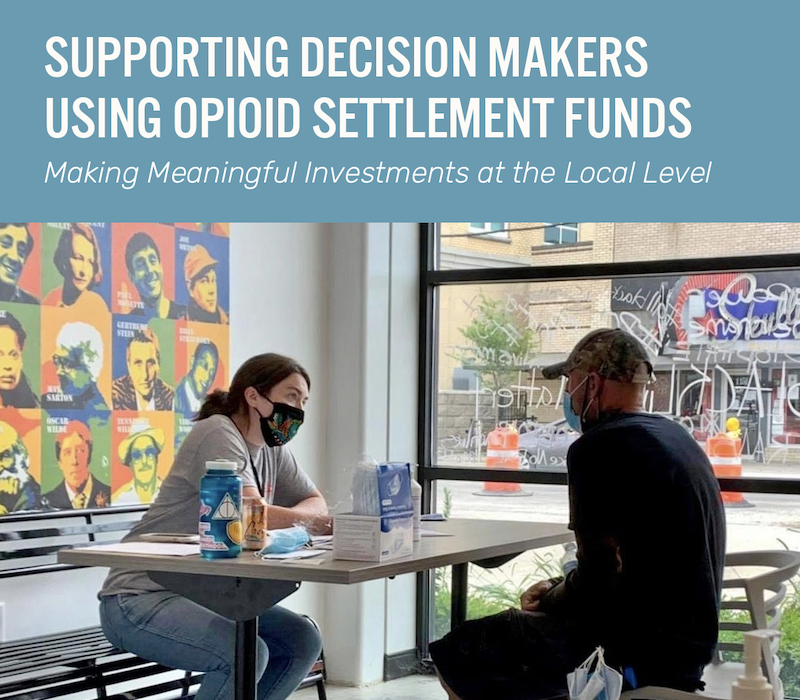
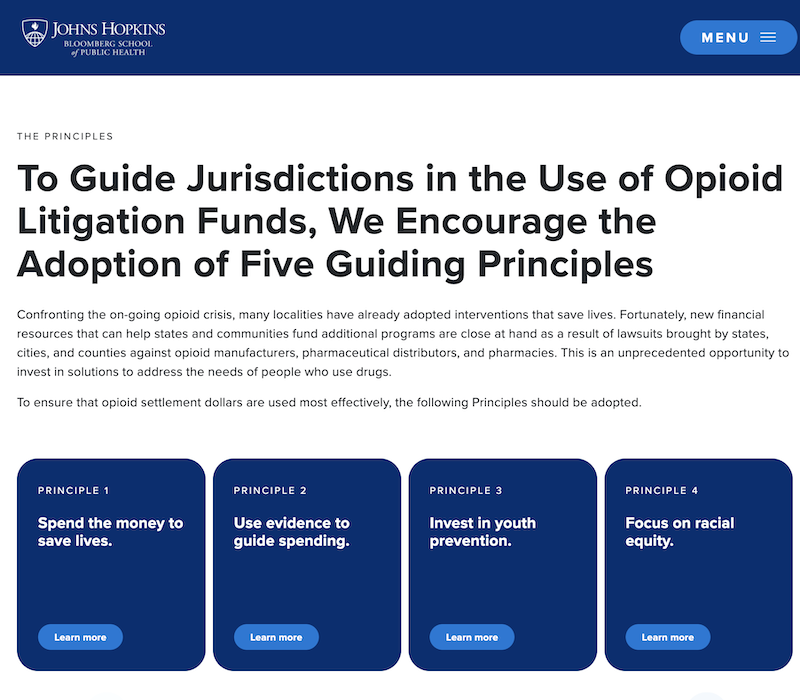
Core principles and strategies that outline Prevention Institute’s approach to uplifting primary prevention in opioid epidemic response
How to Monitor, Evaluate, and Track the Impact of Opioid Settlement-Funded Initiatives
RTI INTERNATIONAL & PREVENTION INSTITUTE
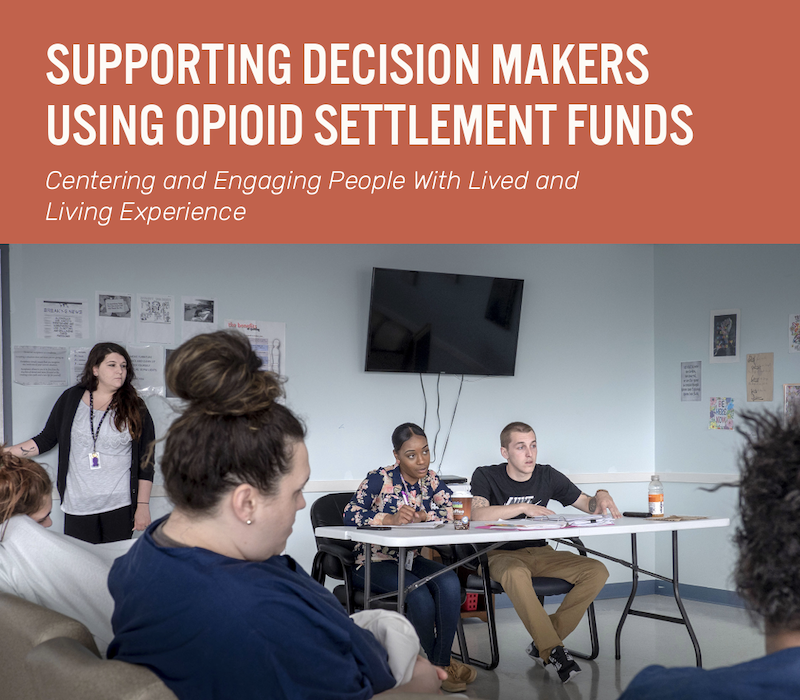
Guidance for states and community organizations on adopting an effective Monitoring and Evaluation framework to measure the impact of opioid settlement fund allocations
Identified resources reflect a range of narrative change strategies and approaches. Please click one of the four blue tabs below to explore each resource category.
Module that offers resources, tools, and examples to apply the racial justice principles to violence prevention narrative change, framing, and communications
Big Cities Health Coalition and Prevention Institute
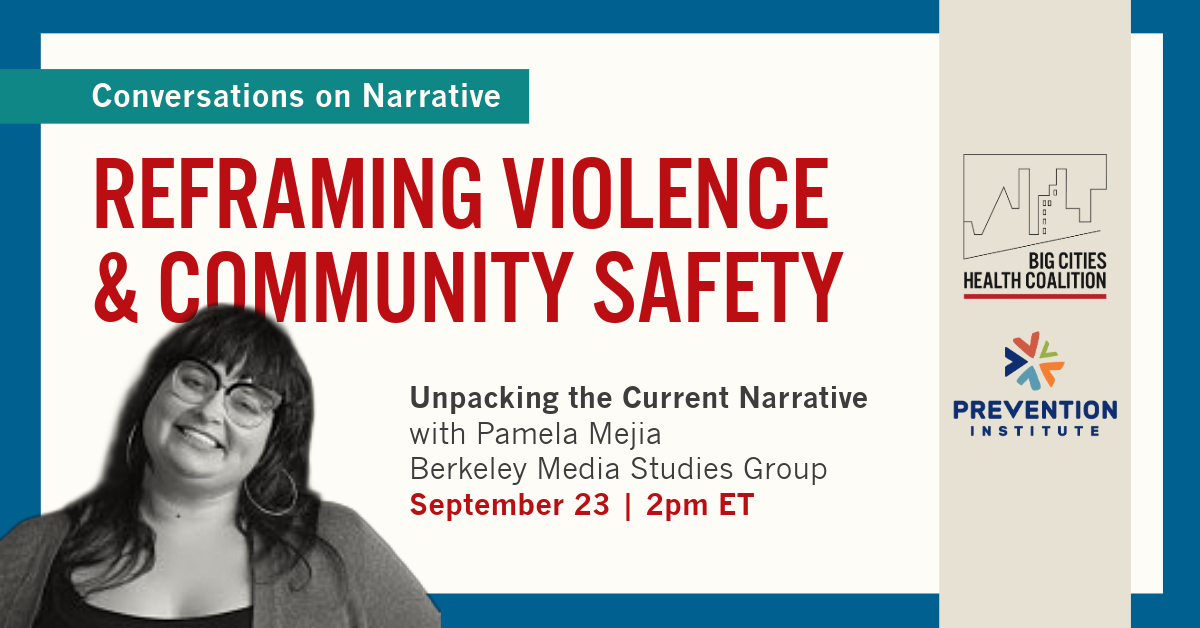
Webinar featuring guest speaker Pamela Mejia (Berkeley Media Studies Group) to examine current narratives regarding violence and community safety and discuss practical tools for shifting our language
Report that explores the role of narratives in driving social change, illustrating different phases of action and how changemakers can build momentum for narrative change
Tools, frameworks, and strategies to implement narrative change
A collection of essays from six organizations that explore how individualism as a value impacts behaviors and systems, and how narrative change approaches can be applied to shift mindsets around health and structural change
County Health Rankings & Roadmaps and Human Impact Partners: Narratives for Health
Collection of resources focused on the process of narrative change, including the examination of dominant narratives and strategies for elevating transformative narratives.
Framework that describes four key capacities that practitioners should include when designing narrative change efforts and considering the allocation of resources
Case study of how the Colorado Department of Public Health and Environment (CDPHE) is implementing equity practices into their work, such as changing the narrative and framing of population health data, incorporating new metrics into program evaluations and monitoring, and implementing boilerplate language to extend conversations about equity
Case study of how the Minnesota Department of Health (MDH) is changing the narrative around health to focus on opportunities and what is needed to be healthy. Details provided around how MDH engaged partners, shifted metrics, and collaborated on a state-wide report to drive action
Research from 2018 analyzing news coverage of gun violence in California, including the type of gun violence most often featured, how stories are framed, and recommendations for advocates
Updated research exploring the media landscape around gun violence in California, with additional attention paid to stories about gun sales and police violence
Community Justice and Northwestern University Center for Neighborhood Engaged Research and Science (CORNERS)
Research analyzing media coverage of gun violence incidents to help news outlets, journalists, educators, and community stakeholders build more just and accurate narrative on gun violence
Source: County Health Rankings & Roadmaps and Human Impact Partners: Narratives for Health Description: Overview of concepts and definitions relevant to narrative change
Source: Prevention Institute Description: Module that offers resources, tools, and examples to apply the racial justice principles to violence prevention narrative change, framing, and communications
Source: Big Cities Health Coalition and Prevention Institute Description: Webinar featuring guest speaker Pamela Mejia (Berkeley Media Studies Group) to examine current narratives regarding violence and community safety and discuss practical tools for shifting our language
Source: The Philadelphia Center for Gun Violence Reporting Description: Toolkit designed to help reporters to avoid perpetuating stereotypical narratives about the people and communities most impacted by gun violence
Source: Berkeley Media Studies Group Description: Blog post that discusses why changing narratives about public health issues require building narrative infrastructure
Source: The Center for Cultural Power Description: Report that explores the role of narratives in driving social change, illustrating different phases of action and how changemakers can build momentum for narrative change
Strategy & Implementation Tools
Tools, frameworks, and strategies to implement narrative change
Source: Medium Description: A collection of essays from six organizations that explore how individualism as a value impacts behaviors and systems, and how narrative change approaches can be applied to shift mindsets around health and structural change
Source: County Health Rankings & Roadmaps and Human Impact Partners: Narratives for Health Description: Collection of resources focused on the process of narrative change, including the examination of dominant narratives and strategies for elevating transformative narratives
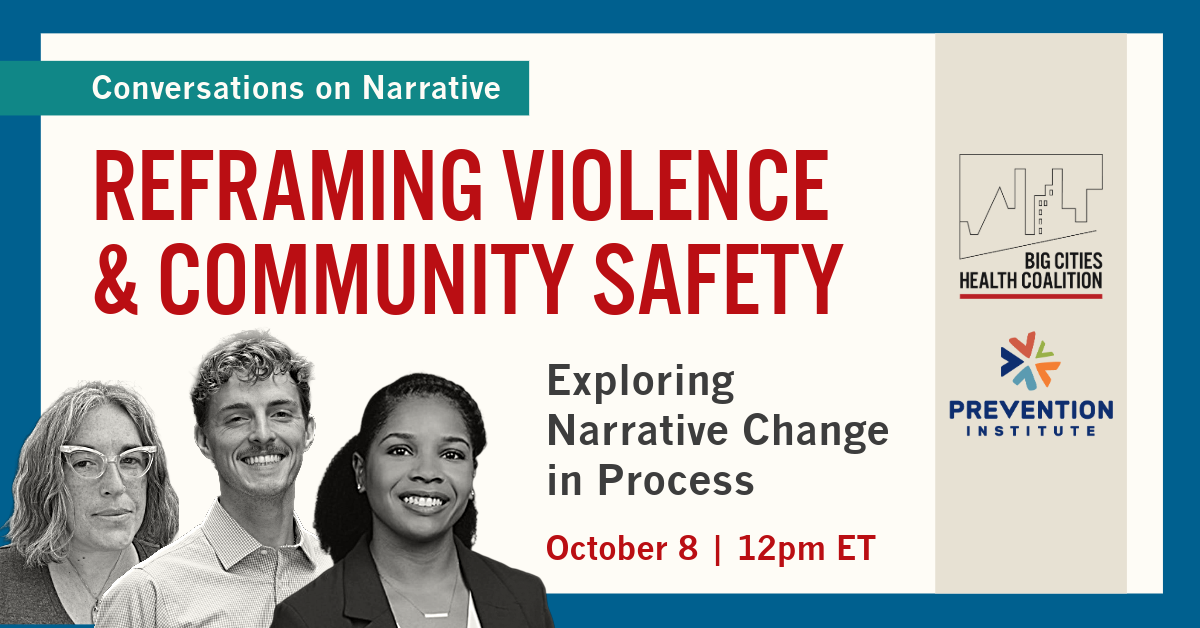
Source: Big Cities Health Coalition and Prevention Institute Description: Webinar with featuring speakers from San Antonio, TX and Seattle, WA showcasing real-world examples of narrative change in community
Source: Narrative Initiative Description: Framework that describes four key capacities that practitioners should include when designing narrative change efforts and considering the allocation of resources
Source: Narrative Initiative Description: Self-assessment designed to help practitioners consider different elements of a successful narrative change effort
Deeper Dive on Narrative
In-depth exploration of transformative narrative change practices
Source: Convergence Partnership Description: Case studies and examples that illustrate how community-led organizations are building and exercising narrative power to advance systemic change
Source: FrameWorks Description: Guide that identifies features that make up a narrative, which can be used to distinguish narratives from other framing strategies and explore existing and emerging narratives in depth
Source: Lori Dorfman, Sarah E. Gollust, Makani Themba, Pritpal S. Tamber, Anthony Iton Description: Article that describes real-world examples of the role of public health in building narrative infrastructure to advance health and racial equity
Source: Health Equity Guide Description: Case study of how the Colorado Department of Public Health and Environment (CDPHE) is implementing equity practices into their work, such as changing the narrative and framing of population health data, incorporating new metrics into program evaluations and monitoring, and implementing boilerplate language to extend conversations about equity
Source: Health Equity Guide Description: Case study of how the Minnesota Department of Health (MDH) is changing the narrative around health to focus on opportunities and what is needed to be healthy. Details provided around how MDH engaged partners, shifted metrics, and collaborated on a state-wide report to drive action
Source: Berkeley Media Studies Group Description: Research from 2018 analyzing news coverage of gun violence in California, including the type of gun violence most often featured, how stories are framed, and recommendations for advocates
Source: Berkeley Media Studies Group Description: Updated research exploring the media landscape around gun violence in California, with additional attention paid to stories about gun sales and police violence
Source: Community Justice and Northwestern University Center for Neighborhood Engaged Research and Science (CORNERS) Description: Research analyzing media coverage of gun violence incidents to help news outlets, journalists, educators, and community stakeholders build more just and accurate narrative on gun violence
Webinars
Scroll below to find recordings from the “Conversations on Narrative: Reframing Violence and Community Safety” two-part webinar discussion.
Webinar 1: Unpacking the Current Narrative (September 23, 2025)
Webinar 2: Exploring Narrative Change in Process (October 8, 2025)
About the Project
For more than five years, Big Cities Health Coalition (BCHC) and Prevention Institute (PI) have partnered to co-lead work on gun violence prevention and community safety through a health equity and racial justice lens.
From the fall of 2023 – 2025, funding from the Kaiser Permanente Center for Gun Violence Research and Education has been used to support broader efforts to operationalize and accelerate the local adoption of a public health and community-centered model for gun violence prevention. The work focuses on policy and systems change across the three interrelated workstreams: (1) capacity building around upstream community safety strategies; (2) improving data/evaluation; and (3) facilitating narrative change.
BCHC and PI contracted with RTI International’s Transformative Research Unit for Equity (TRUE) to provide a landscape overview of the challenges, opportunities, and potential next steps for the project. The final reports identified an initial list of community- and equity-centered metrics and outlined a narrative change strategy plan for public health approaches to community safety. Insights from both reports helped to inform the creation of this repository.
This set of online resources is intended to offer guidance to health departments, community advocates, and other changemakers as they work to reframe and transform narratives around community violence and safety. This site covers a spectrum of narrative changes resources, from introductory materials to tools focused on strategy and implementation.
These resources, which were first compiled in the fall of 2025, are not meant to be comprehensive, but rather, a starting point for continued research, conversation, and application.
Funded by The Kaiser Permanente Center for Gun Violence Research and Education in collaboration with The Health Alliance for Violence Intervention (HAVI)
SHARE THIS
Manage Consent
To provide the best experiences, we use technologies like cookies to store and/or access device information. Consenting to these technologies will allow us to process data such as browsing behavior or unique IDs on this site. Not consenting or withdrawing consent, may adversely affect certain features and functions.
Functional
Always active
The technical storage or access is strictly necessary for the legitimate purpose of enabling the use of a specific service explicitly requested by the subscriber or user, or for the sole purpose of carrying out the transmission of a communication over an electronic communications network.
Preferences
The technical storage or access is necessary for the legitimate purpose of storing preferences that are not requested by the subscriber or user.
Statistics
The technical storage or access that is used exclusively for statistical purposes.The technical storage or access that is used exclusively for anonymous statistical purposes. Without a subpoena, voluntary compliance on the part of your Internet Service Provider, or additional records from a third party, information stored or retrieved for this purpose alone cannot usually be used to identify you.
Marketing
The technical storage or access is required to create user profiles to send advertising, or to track the user on a website or across several websites for similar marketing purposes.