Frontline Blog
When public health infrastructure is tested: Milwaukee’s lead response
March 2026
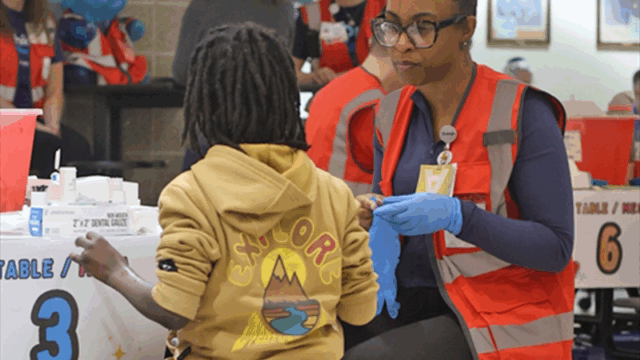


In early 2025, the City of Milwaukee Health Department confirmed that a local student had been poisoned by lead paint hazards inside their elementary school. What unfolded traces an important story about why rapid, thorough health department response and federal support matter so much to our public health.
As the health department expanded its testing, they realized they were confronting something far larger than a single building: a district-wide challenge across Milwaukee Public Schools that demanded rapid action, scientific precision, and constant communication with families.
Over the next several months, environmental health inspectors worked weekends conducting top-to-bottom assessments of aging school facilities. The city’s public health laboratory turned around results within 24 hours so schools could make informed decisions about closures and reopenings. The school district relocated students when necessary and reworked custodial schedules.
Ultimately, the city stabilized lead paint hazards in 99 elementary schools, clearing 2,700 classrooms and shared spaces in a compressed timeline. All of it unfolded in full public view, with weekly briefings and posted inspection findings as families demanded answers.
At the same time, Milwaukee had to navigate the crisis without expert national guidance after CDC’s entire childhood lead team was eliminated during federal staffing cuts – only to be reinstated weeks later. That federal-local partnership is now central to Milwaukee’s next phase: nearly $400,000 in CDC support will cover expanded school-based lead screening for up to 8,000 students.
One year later, Milwaukee’s experience offers a clear-eyed look at what it takes to respond to large-scale environmental health risks in schools — and how local public health infrastructure, transparency, and sustained investment make prevention possible.
Frontline Blog
Related data: lead exposure disproportionately affects children in five major cities
Children living in cities with the highest poverty rates and oldest homes have a prevalence of elevated blood lead four times that of children living in other cities.